Asphalt Calculator: How Much Asphalt Do I Need?
Estimate how much asphalt you need in tons or tonnes, then check material and installed cost. Enter your area, thickness, and local price to get a free planning estimate before requesting quotes.
Use area or length × width to answer how much asphalt you need and estimate material and installed cost for a basic project.
Input mode
Selected: Area
Units
Selected: Imperial (tons)
Fresh asphalt over prepared base.
A little waste is normal for cuts, waste, and site cleanup.
A simple starting point for quick estimates.
Quote range
Project estimate
Results update automatically as you edit.
Asphalt needed
11.6 tons / 10.6 tonnes
A quick quantity number for quotes and ordering.
Material cost
$1,047 - $1,629
About $2 - $3 per sq ft.
Installed cost
$1,629 - $2,560
About $3 - $4 per sq ft for new installation.
Final pricing depends on access, prep work, base condition, grading, haul distance, and local crew rates.
Ready to ask for a quote?
Paste these numbers into a message when you ask a local paving contractor for a quote.
Direct answer
How much asphalt do I need?
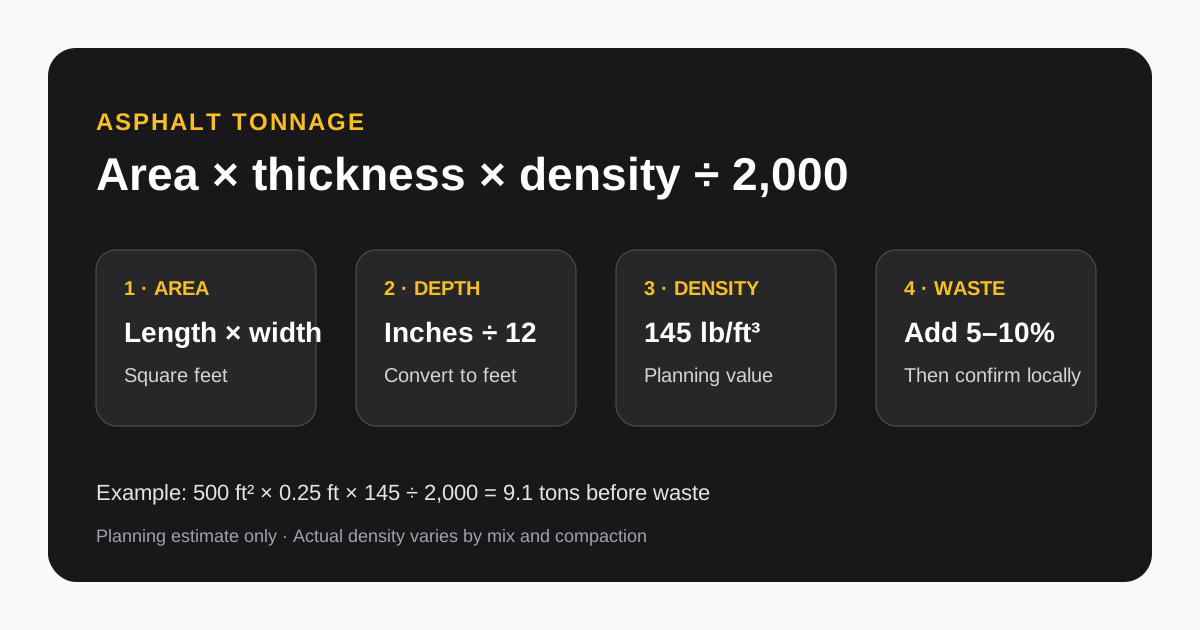
To estimate how much asphalt you need, measure the finished area, choose the compacted thickness, convert thickness from inches to feet, multiply by a planning density, divide pounds by 2,000 to get short tons, and then add waste. This calculator uses 145 lb/ft³ as a planning density, so 500 square feet at 3 inches is about 9.1 tons before waste and about 9.7 tons with 7% waste. Mix design and compaction can change the actual weight, and curves, hand work, awkward access, or small patches may need more material. Enter a current local price when you have one, then confirm the mix, quantity, delivery, and minimum load with the supplier or installer before ordering.
Formula and coverage
Asphalt formula, tonnage, and coverage
The formula uses area, thickness, density, and waste with 145 lb/ft³ as the base planning density.
That means one ton covers about 83 square feet at 2 inches, about 55 square feet at 3 inches, and roughly one cubic yard comes out close to 2 tons before waste and compaction changes the number.
Standard formula
Area × thickness × density ÷ 2000 gives a planning tonnage estimate. The calculator uses 145 lb/ft³ as the base density.
How much in a ton
At this density, one ton covers about 83 square feet at 2 inches or about 55 square feet at 3 inches before waste.
Tons per cubic yard
One cubic yard of asphalt is roughly 2 tons, depending on the mix and how tightly it is compacted.
Blacktop calculator
Blacktop is another common name for asphalt, so the same formula and calculator work for both terms.
How it works
Turn a few inputs into an estimate
The calculator turns simple project details into a rough asphalt budget. It uses square footage, thickness, standard asphalt density, a waste allowance, and regional pricing. Confirm site conditions with a contractor before treating it as a final price.
Step 1
Measure the area
Enter the square footage you want to cover. For a rectangular driveway, multiply length by width. For irregular shapes, break the area into smaller rectangles and add them together.
Step 2
Choose thickness
Most residential asphalt driveways use 2 to 3 inches of compacted asphalt. Thicker sections use more material but can be better for heavier use.
Step 3
Pick a region
Material and labor prices change by market. Choosing the closest region gives you a more useful first-pass range than a single national average.
What changes the price
Factors that affect asphalt cost
Asphalt cost is not just one number. It shifts with thickness, area, waste, local market conditions, base prep, access, and how much labor the crew needs to spend on the site. Understanding those factors helps you compare contractor bids more fairly.
Want to understand cost factors in detail? Read our complete asphalt cost guide to see how each factor changes the number and what to ask before accepting a quote.
Thickness
Thickness is one of the biggest cost drivers because it changes tonnage directly. A thin overlay may be fine for a stable surface, while a full driveway often needs a thicker section.
Project size
Larger jobs often have a better cost per square foot because equipment, delivery, and crew setup are spread across more area. Small repair jobs can feel expensive because of minimum charges.
Region
Labor rates, haul distance, local asphalt plant access, and seasonal demand all affect the final price. Dense metro areas and short paving seasons usually push bids higher.
Base condition
Asphalt is only as reliable as the base underneath it. Soft soil, drainage issues, or a failing old driveway can add grading, stone, compaction, or removal work.
Access and cleanup
Tight access, long hauls, difficult staging, or extra cleanup can add labor time. Make sure contractor quotes spell out what is included.
Regional pricing
Average asphalt costs by region
Asphalt pricing changes across the United States because labor, weather, haul distance, and plant access are different in every market. The bands below use broad regional assumptions from the calculator. For a more detailed regional view, see our asphalt prices by state page.
Northeast
NY, PA, NJ, MA, CT
Material: $105 - $155 per ton
Installed: $160 - $240 per ton
Cold winters, shorter paving seasons, and higher labor rates can raise installed prices. Urban jobs may also have access and scheduling costs.
South
FL, GA, NC, TN, VA
Material: $85 - $130 per ton
Installed: $130 - $205 per ton
Longer paving seasons often help keep costs steadier, though coastal markets and busy metro areas can still run above the regional baseline.
Midwest
OH, IL, MI, IN, WI
Material: $90 - $135 per ton
Installed: $140 - $215 per ton
Many Midwest markets sit near the national middle band. Local plant access and straightforward suburban driveways can keep estimates practical.
West
CA, WA, CO, AZ, OR
Material: $100 - $150 per ton
Installed: $155 - $235 per ton
Western pricing varies widely. Coastal cities, mountain access, and long haul distance can raise quotes, while interior markets may be more moderate.
Avoid budget misses
Common cost estimation mistakes
Many asphalt budgets go wrong before a contractor ever visits the site. The most common problems are simple: using a generic average, missing prep work, measuring too quickly, or comparing bids that do not include the same scope.
Need help reviewing quotes? Our asphalt contractor guide shows what to ask, what to compare, and which red flags to watch before you hire a paving crew.
Using one national average
A single price per square foot can be misleading. A driveway in a high-cost metro area may not price like the same driveway in a lower-cost suburban market.
Forgetting base preparation
The asphalt layer is only one part of the project. Removal, stone base, grading, compaction, and drainage work can move the final bid more than the asphalt itself.
Measuring too quickly
A small measurement error can turn into a big budget miss. Recheck length and width, include flares or parking pads, and leave a waste allowance.
Comparing unlike quotes
One contractor may include removal and cleanup while another only prices the new asphalt. Compare thickness, prep scope, warranty, and cleanup before choosing.
Picking only the lowest number
A very low quote can mean thinner asphalt, skipped prep, or unclear cleanup. A good bid should explain the work, not just show a low total.
Examples
Real-world asphalt estimate examples
These examples show how the same formula changes with area, thickness, and region. Use them as a quick sanity check, then enter your own project details in the calculator above.
Residential driveway
1,000 sq ft, 2 inch asphalt surface, Northeast pricing
Asphalt needed: 12.9 tons
Material range: $1,358 - $2,004
Installed range: $2,069 - $3,103
This is a useful baseline for a city or suburban driveway where labor and scheduling costs can run higher.
Larger driveway or pad
2,000 sq ft, 3 inch asphalt surface, Midwest pricing
Asphalt needed: 38.8 tons
Material range: $3,491 - $5,236
Installed range: $5,430 - $8,339
The larger area uses more tonnage, but the project may be easier to compare across multiple contractor bids.
Small repair area
500 sq ft, 1.5 inch overlay, West pricing
Asphalt needed: 4.8 tons
Material range: $485 - $727
Installed range: $752 - $1,139
Small jobs can still have minimum charges, so use the estimate as a material and planning check rather than a final bid.
Related calculators
Start with the one that fits your project
Asphalt driveway cost calculator
Price out a standard driveway with tons and installed cost.
Asphalt tonnage calculator
Focus only on material quantity and coverage per ton.
How much asphalt do I need?
Walk through area, thickness, waste, and tons in plain language.
Asphalt vs concrete
See the rough cost gap between the two materials.
Driveway cost calculator
Compare asphalt, concrete, and gravel in one place.
Parking lot paving cost calculator
Estimate small lot paving cost with tonnage and quote scope.
Private asphalt road cost calculator
Estimate asphalt surface tonnage and cost for private roads and access lanes.
Asphalt cost per square foot
Compare installed quotes using square-foot pricing.
Hot mix asphalt cost per ton
Check material unit pricing before comparing bids.
Tar and chip driveway cost calculator
Estimate chip seal by square footage and scope.
FAQ
Frequently asked questions
Find quick answers about asphalt quantity, coverage, pricing, and ordering.
Next steps
What to do after you get an estimate
Compare the estimate with local bids and make sure every quote uses the same assumptions. Thickness, base prep, drainage, cleanup, and warranty details matter as much as the total price.
Read the detailed cost guide
Learn what should be included in a quote and how prep work, base condition, and thickness affect the number.
ContinueCompare asphalt with concrete
Check whether asphalt still makes sense when you compare it with concrete and gravel for the same project size.
ContinueCheck pricing by state group
Use broad regional bands to understand why the same driveway can cost more in one market than another.
ContinueDisclaimer
Local market prices, base preparation, haul distance, drainage, access, and crew availability can move a quote up or down. Confirm the final scope and price with a local paving professional.